Glass Linear Scales

Choose by function

What it is and what it does

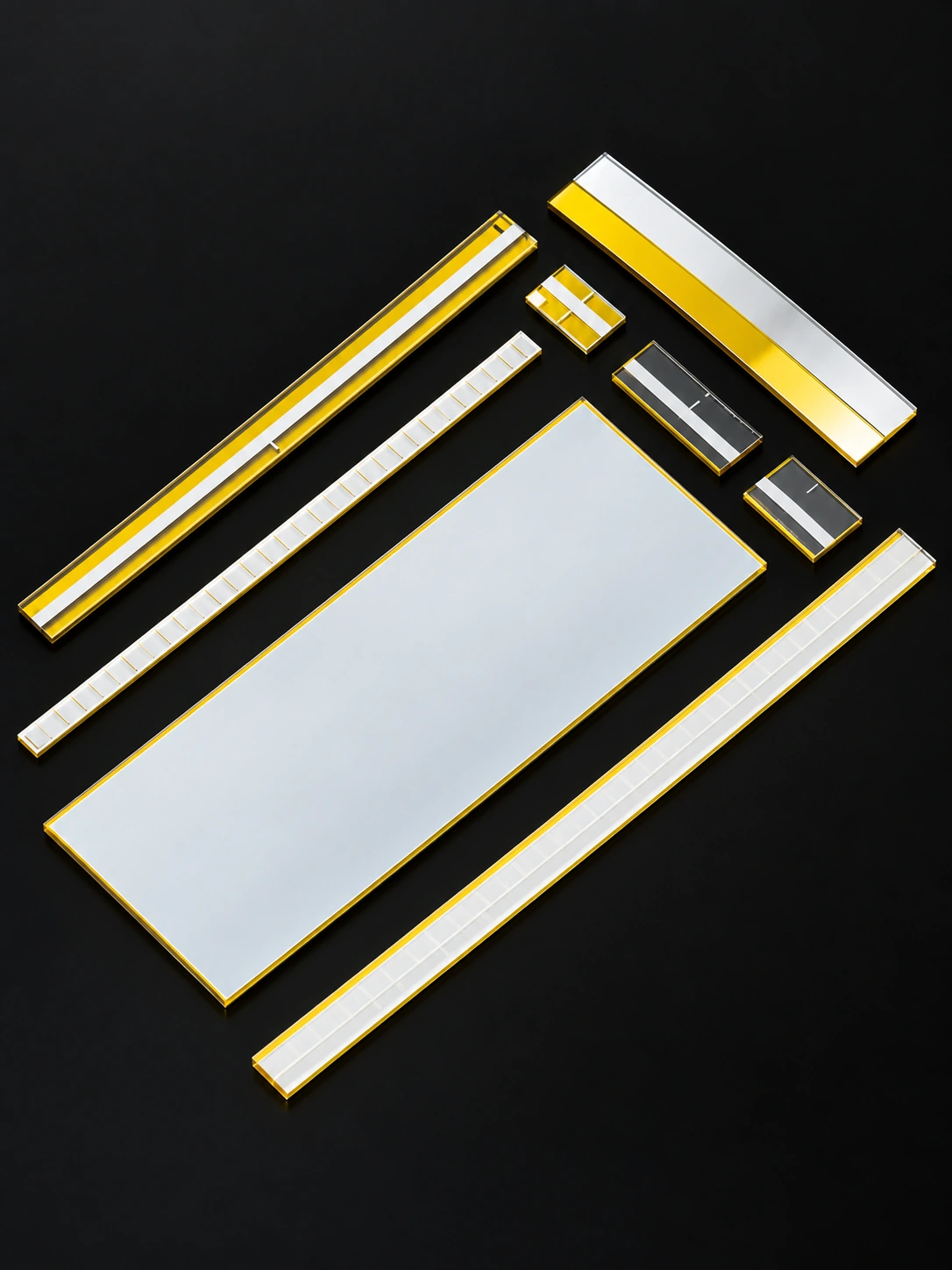
Glass linear scales carry a physical length or position reference along a measuring axis. Encoder scales use a matched optical readhead; high-precision line scales use visible graduations for calibration, measurement or positioning.

When to choose it

Choose an encoder scale for continuous readhead feedback. Choose a high-precision line scale when the graduation geometry itself is inspected or read as the dimensional reference.

How it differs from related products

A rotary disc gives an angular reference; a linear scale gives a distance reference. Optical access and position encoding are independent choices within the scale family.

What can be customised

Measuring length, physical pitch or code map, reference marks, optical contrast, mounting datums and glass outline define the scale configuration.

What you receive

A patterned glass scale with the selected measuring length, code or grating layout, reference marks and component inspection records.

Request a Quote
Transmissive Glass Encoder Scales

Transmissive Glass Encoder Scales

Custom chrome-on-glass linear encoder scales for transmitted-light readheads. Clear and opaque tracks define the optical signal; incremental gratings or absolute code sequences are manufactured to your approved artwork.

Reflective Glass Encoder Scales

Reflective Glass Encoder Scales

Custom reflective glass scales for optical linear encoders with the source and detector on the same side. High- and low-reflectance pattern regions are specified together with the readhead wavelength, angle and sensing gap.

High-Precision Glass Line Scales

High-Precision Glass Line Scales

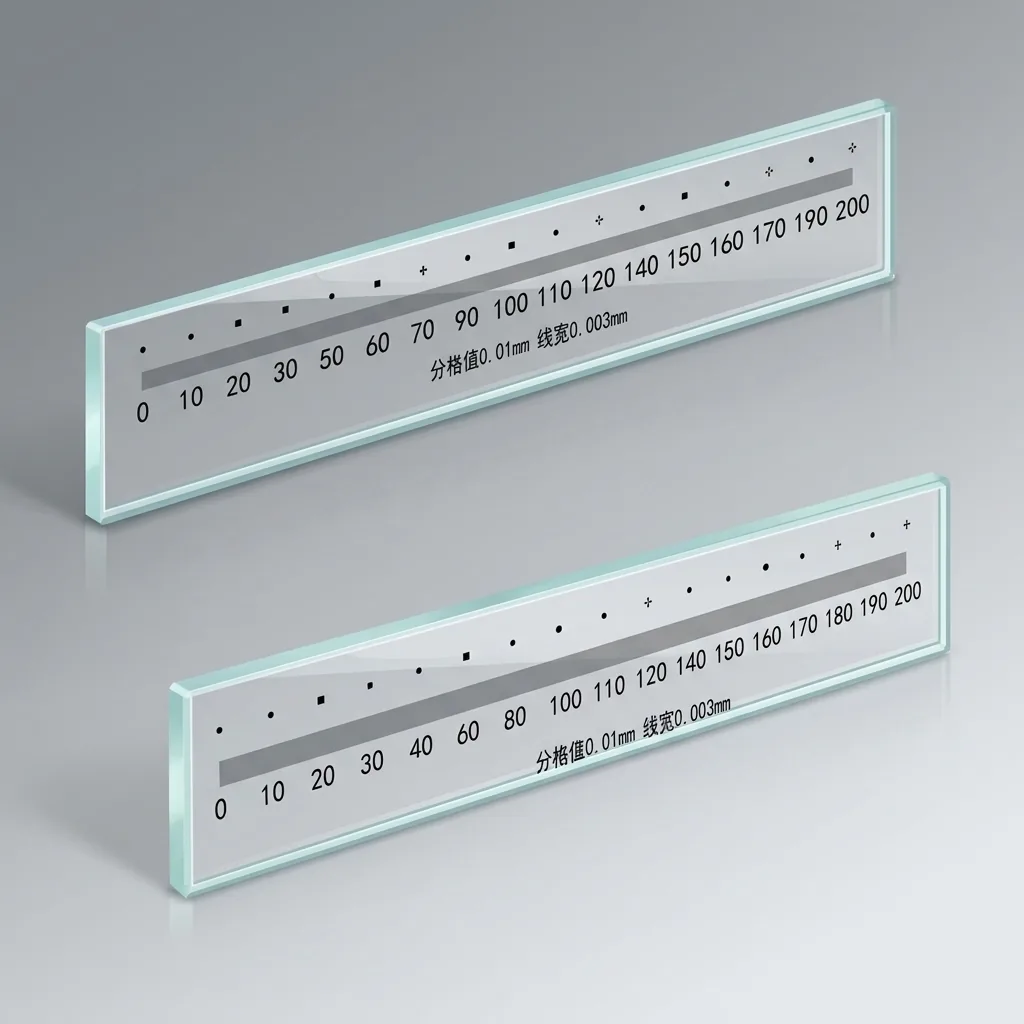
Precision optical-glass scales with clearly defined graduations for length calibration, measurement verification, linear positioning and compensation. Standard and drawing-defined formats are available.

Compare the patterns

Product typeWhen to choose it
Transmissive Glass Encoder ScalesChoose it when the assembly provides optical access to both sides of the scale and the readhead uses transmitted light.
Reflective Glass Encoder ScalesChoose it when the reader is designed for one-sided optical access and its wavelength, illumination angle and sensing window match the coating and pattern.
High-Precision Glass Line ScalesChoose it for calibration, instrument indication checks, visible length measurement or machine-axis error evaluation where the graduation geometry itself is the reference.

Choose the light path and the position code

Transmission or reflection

Two-sided access supports a transmitted-light reader. One-sided access supports a matching reflected-light reader, with both reflectance levels defined.

Match the light path to the sensing optics

Check interval accuracy across the measuring length

Where this product is used

For encoder scales, choose how position is encoded

These are encoding options for scales read by a compatible optical head. A calibration line scale instead uses its visible graduations as the dimensional reference.

Incremental Linear Encoder Scales

A repeating grating measures changes in position. Add a single reference mark or an approved distance-coded reference pattern for the homing strategy. Specify physical pitch, duty cycle and reference geometry independently from interpolated output resolution.

Absolute Linear Encoder Scales

A defined code identifies position within the reading window. Multi-track codes and single-track pseudo-random sequences require different decoding arrangements. Supply the complete code map, fine-track relationship, reading direction and absolute zero.

Substrate & optical configuration

Specify substrate material and geometry together with the operating wavelength. For transmissive reading, define clear-area transmission and opaque-track density. Reflective reading also needs the high/low reflectance pair and illumination geometry. Optical contrast must match the readhead, not only the appearance of the part.

Selection notes

Glass linear scales carry periodic graduations or absolute codes as references for optical displacement measurement.

Match transmissive or reflective reading to the head, then specify pitch or code, useful travel, mounting edges and reference positions.

Information for your inquiry

Active length, width, thickness, pitch or code map, reference marks, mounting and readhead requirements.

Is active length the same as overall glass length?

Active length is the readable pattern range. The glass may include additional mounting and handling margins; dimension both.

Search